博文
Tridentate Iridium(III) Complex for Mitochondria-Targeting
|
Fei Luo,Qin Zhou,Ruixia Liu,Anli Liu,Zhigang Niu,Fabiao Yu,Gaonan Li
First published: 09 July 2026
https://doi.org/10.1002/aoc.70621
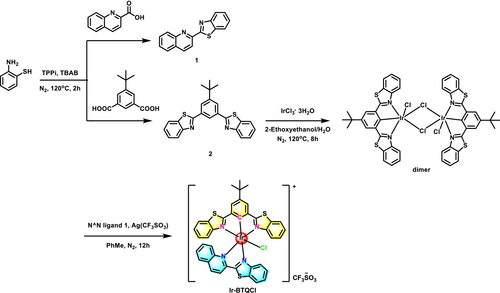
ABSTRACTGiven the limitations of platinum-based drugs in terms of toxicity and drug resistance, the development of highly efficient and low-toxicity iridium complexes has become a focal point in anticancer research. In this study, a new tridentate iridium complex, Ir-BTQCl, was rationally designed and synthesized, displaying red emission at 616 nm in solution with a photoluminescence quantum yield of 5.7%. The complex exhibited potent inhibitory effects across multiple tumor cell lines and demonstrated a remarkably lower IC50 value (2.97 μM) against A549 cells than cisplatin (20.01 μM). Mechanistic studies revealed that Ir-BTQCl primarily localizes in mitochondria, leading to a decrease in mitochondrial membrane potential (MMP), elevated reactive oxygen species (ROS) levels, G0/G1 cell-cycle arrest, and apoptosis via the mitochondrial pathway. In an A549 tumor-bearing mouse model, the complex achieved a tumor inhibition rate of 76.85%, significantly outperforming cisplatin (53.62%) while showing lower systemic toxicity. This study provides new insights into the development of highly efficient and low-toxicity mitochondria-targeted iridium-based antitumor agents.
https://blog.sciencenet.cn/blog-2438823-1543264.html
上一篇:Fluorescent Probes for Ag+ and Hg2+ Sensing- A Review
下一篇:H2O2/viscosity dual-responsive fluorescent probe for redox


全部作者的其他最新博文
- • phosphorescent iridium (III) probes for selenocysteine
- • Sequential recognition of hydrogen polysulfides and formalde
- • Reversible Imaging of the HOCl/GSH Redox Cycle
- • Near-Infrared Imaging of Glycerol-3-Phosphate Dehydrogenase
- • two-photon probe fo hydrogen polysulfides and formalde
- • The therapeutic of metformin in articular cartilage repair